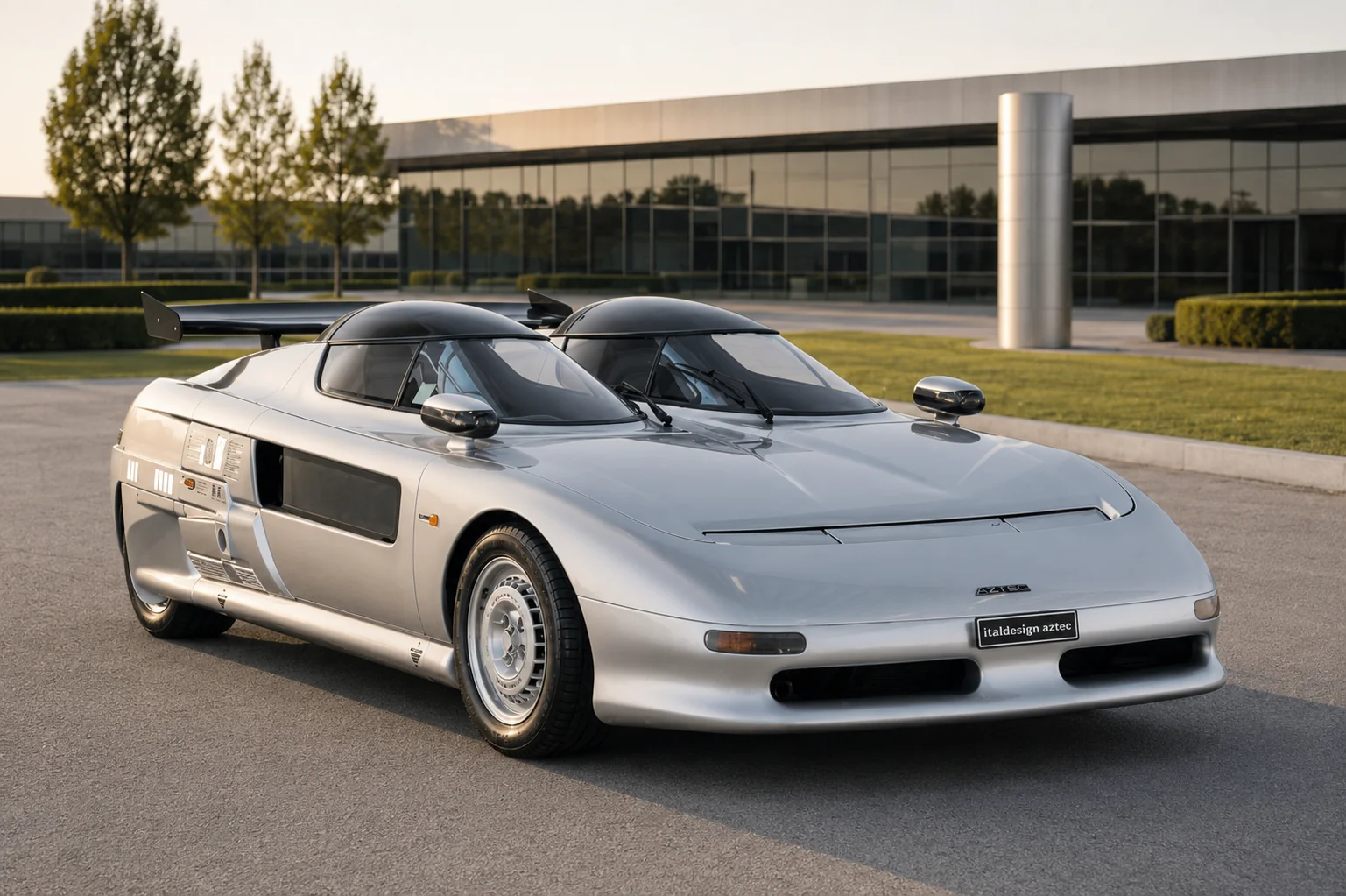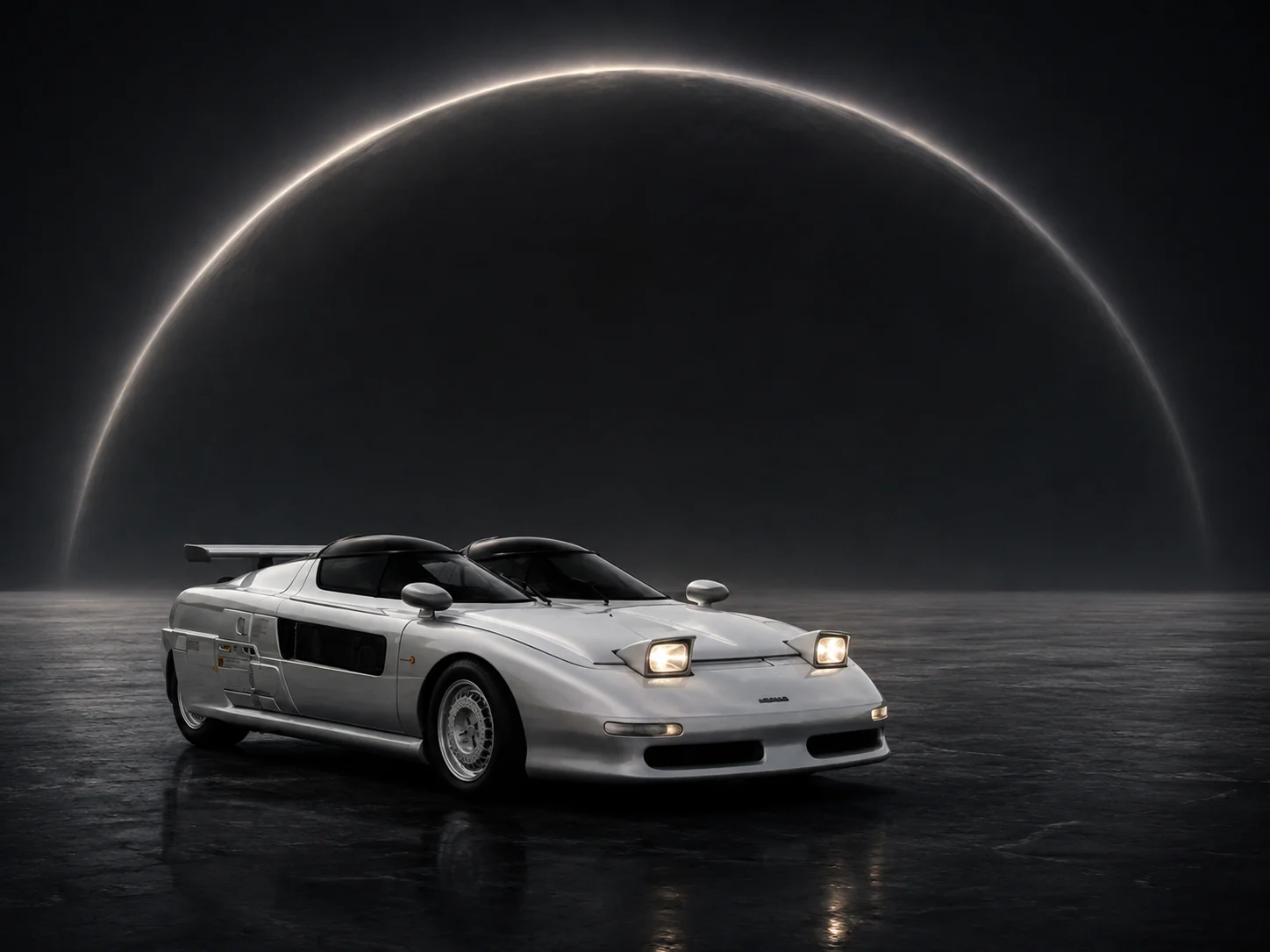
ItalDesign Aztec
No Client, No Brief
Three Cars for an Anniversary
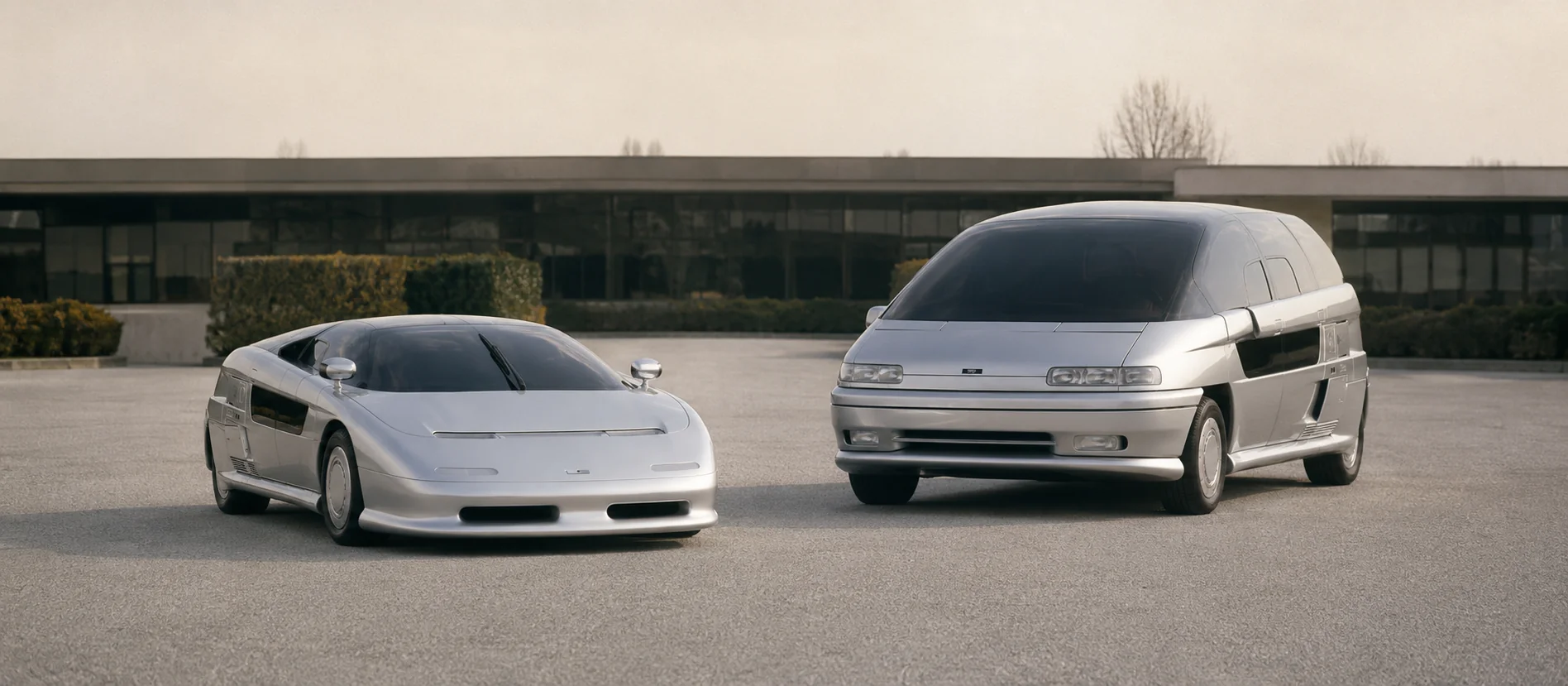
In 1968 Giorgetto Giugiaro founded a studio of his own. Twenty years later he marked the occasion with three cars built to no client brief, shown together on the ItalDesign stand at the Turin Motor Show in 1988: the Asgard people carrier, the Aspid coupé and the Aztec, an open two seater. None of the three was meant for production. Two of them stayed that way.
The timing is the improbable part. Group B rallying had run from 1982 to 1986 and ended after a sequence of crashes that killed drivers and spectators, leaving behind the fastest machinery the sport had produced and a generation of engineers who had worked with almost no rules to hold them.
Less than two years after the FIA closed the class, Giugiaro took its two most consequential ideas and put them into a car with no competition purpose at all. The engine came from Audi, the drivetrain from Lancia, both from programmes that had spent four seasons trying to beat each other.
That combination alone would have made the Aztec notable. What ItalDesign built around it made the mechanical specification almost a footnote.
Everything underneath came from somewhere else. Nothing above it did.
Metal, Not Bodywork
A Surface That Explains Itself
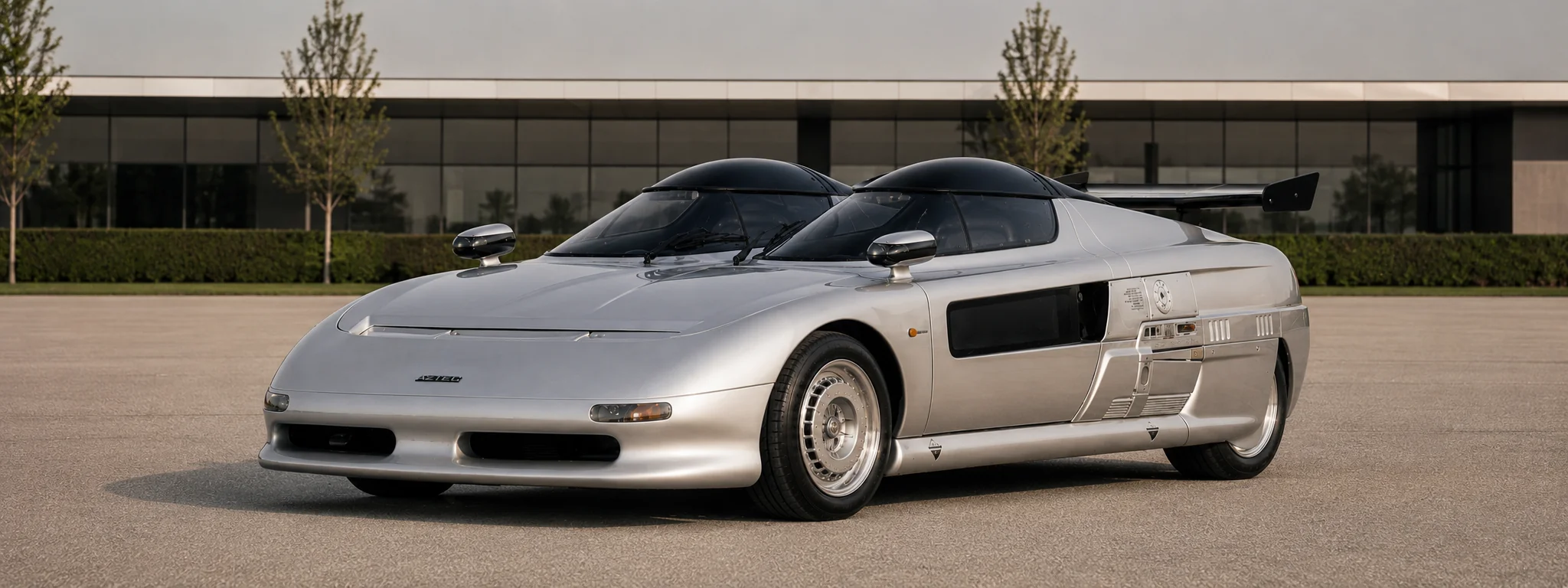
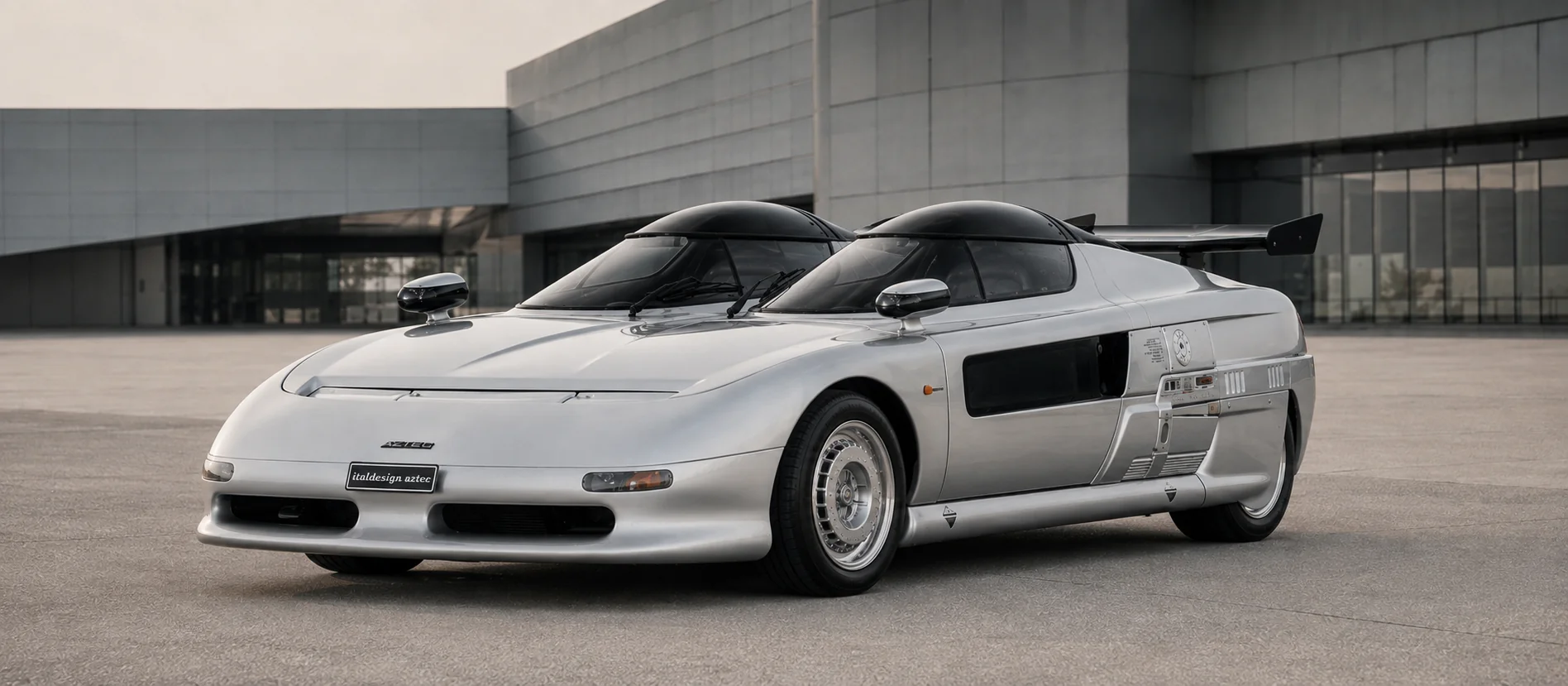
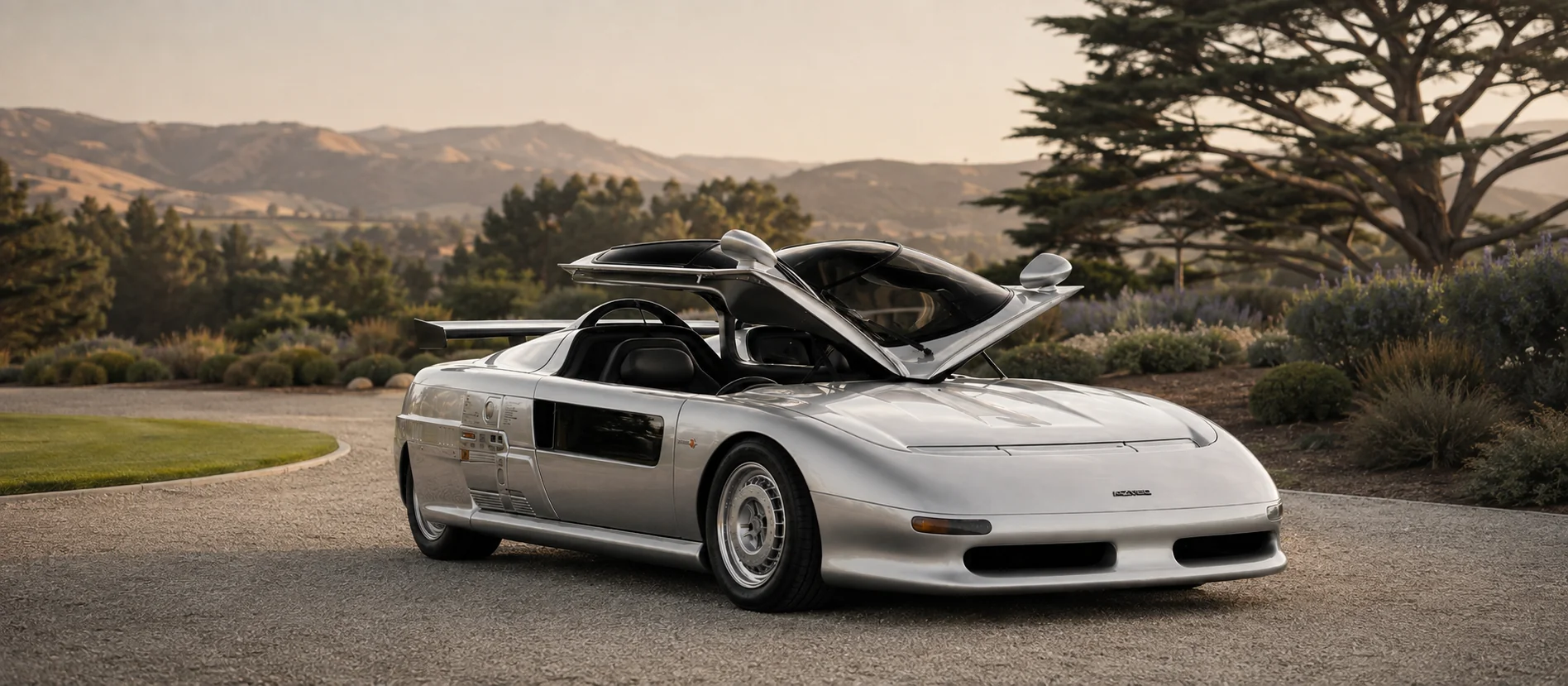
ItalDesign set an unusual ambition for the Aztec: a shape sculpted rather than designed. In practice that meant long stretches of unbroken metal, interrupted on purpose by graphic markings, numbered panels and lettering applied as though the car were a piece of equipment rather than a product.
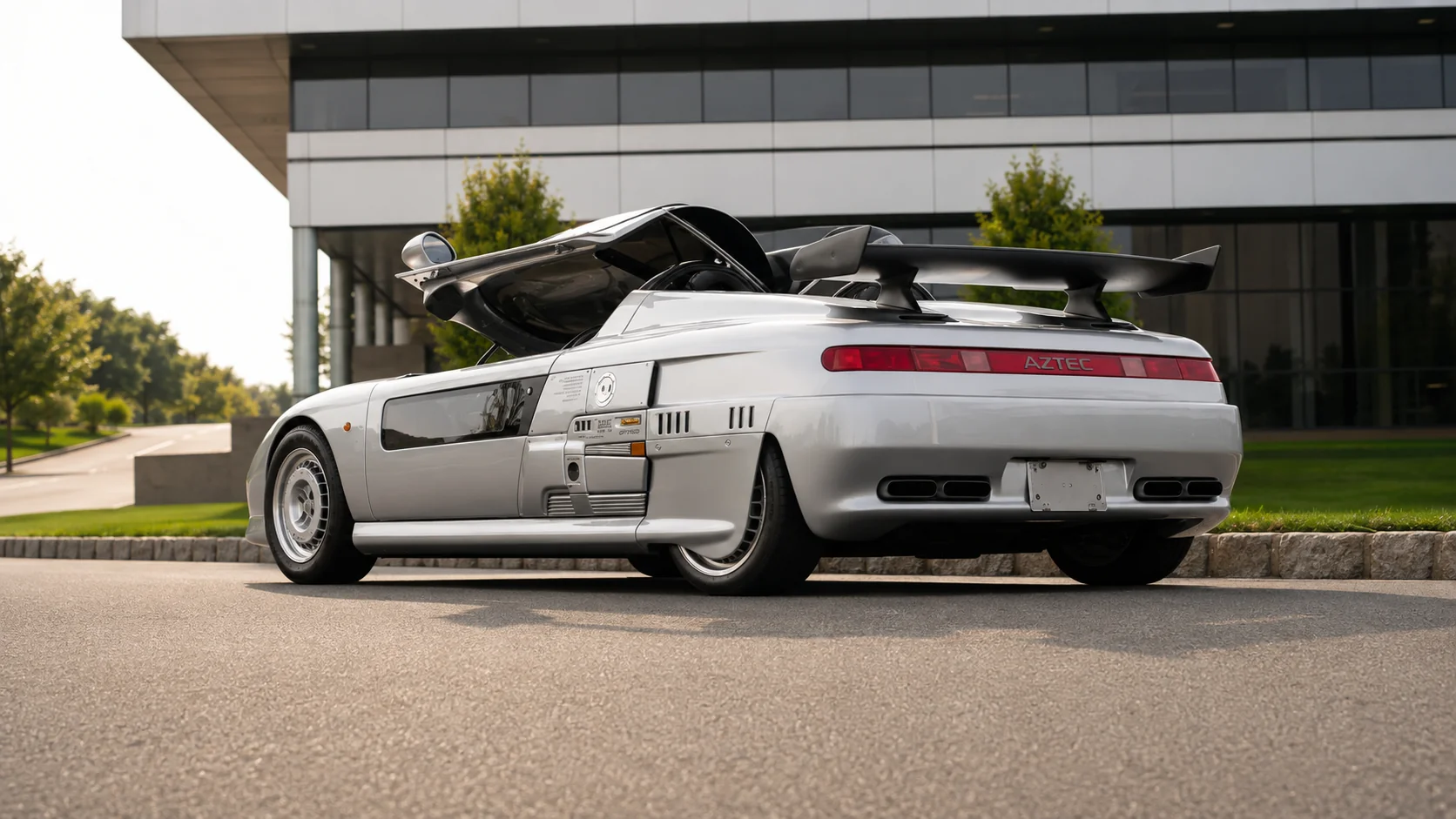
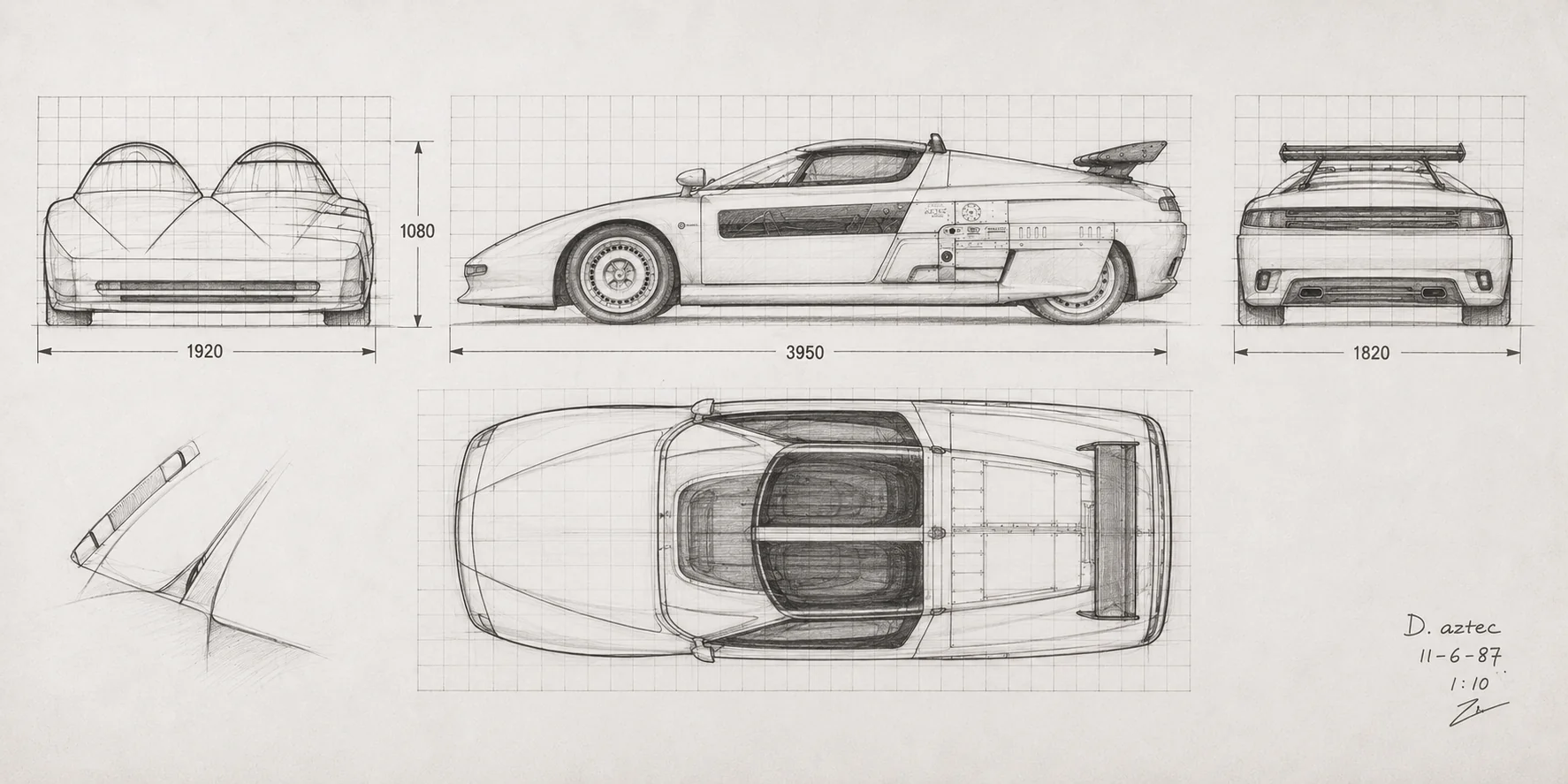
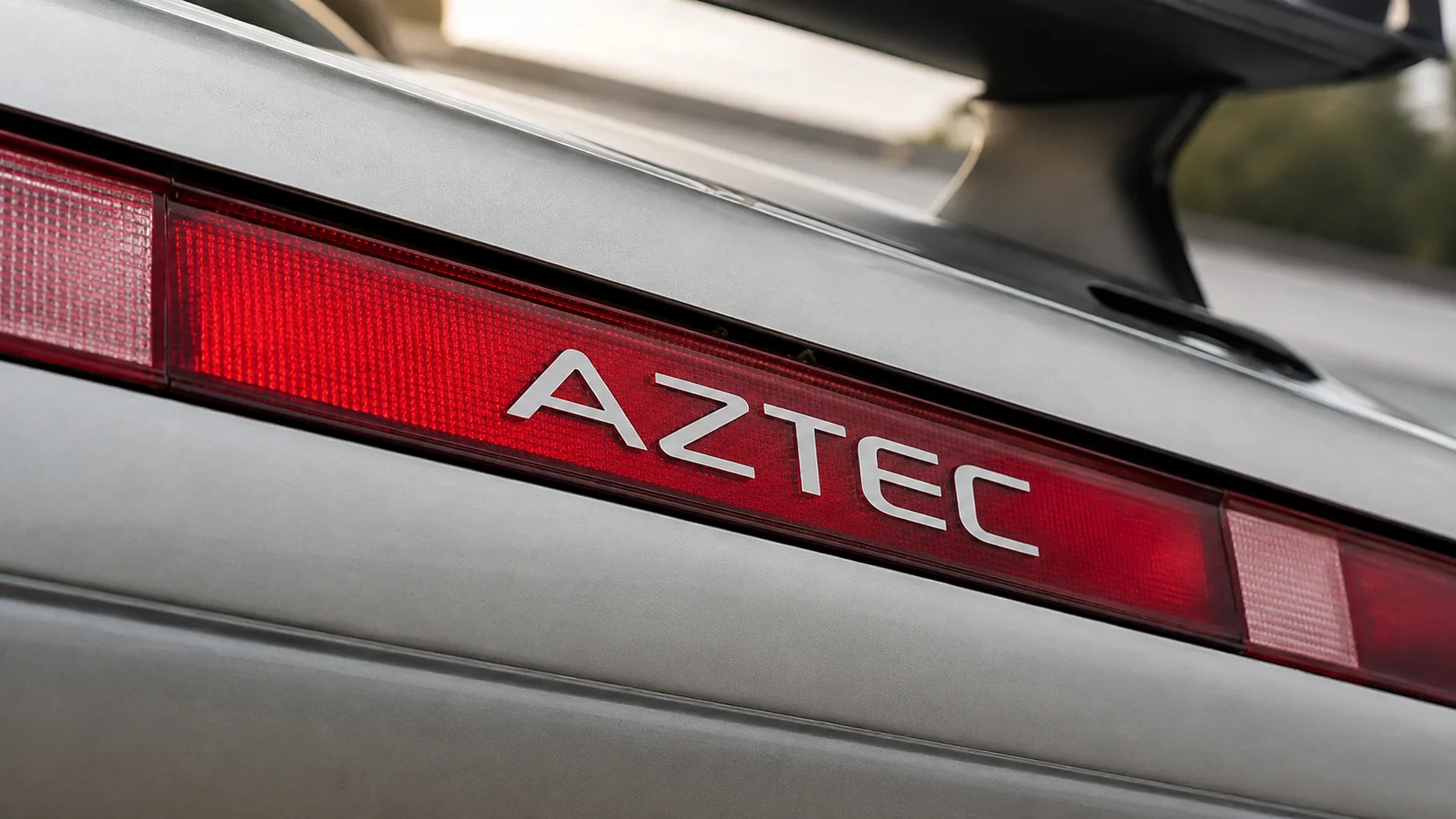
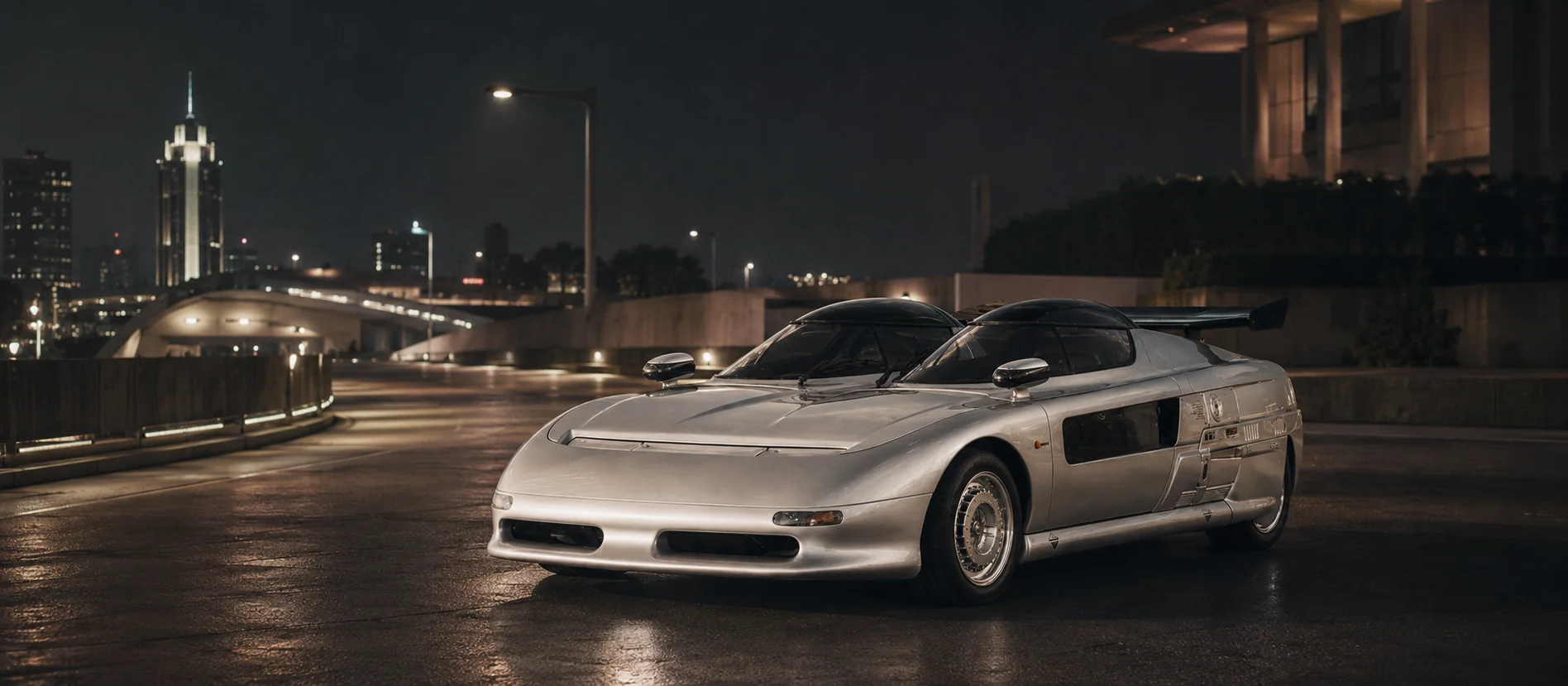
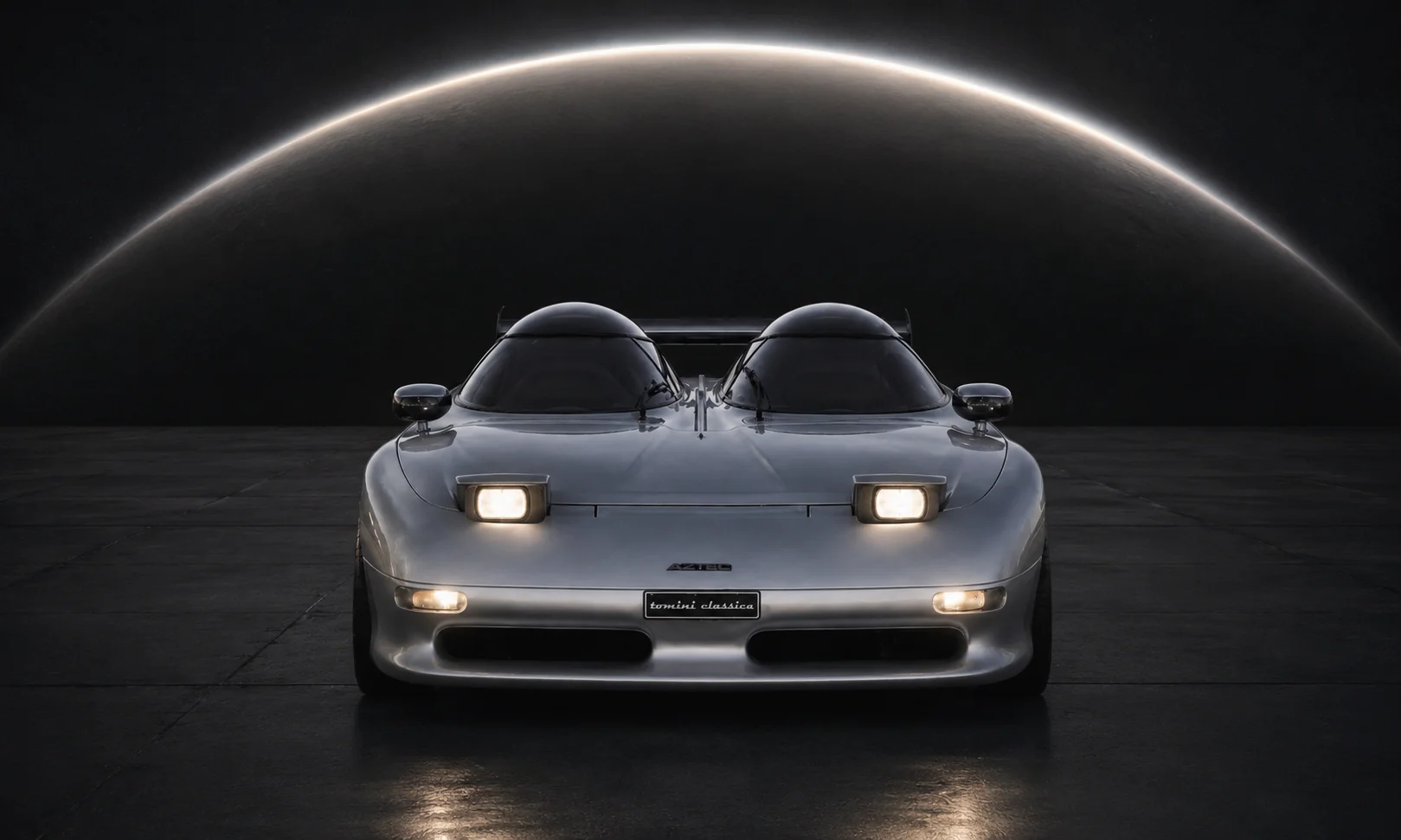
The profile is a wedge with pop up headlights and rear wheels half covered by fixed skirts. Nothing tapers at the back. The tail is cut flat and carries a full width lamp panel above a carbon fibre wing sized for a racing car.
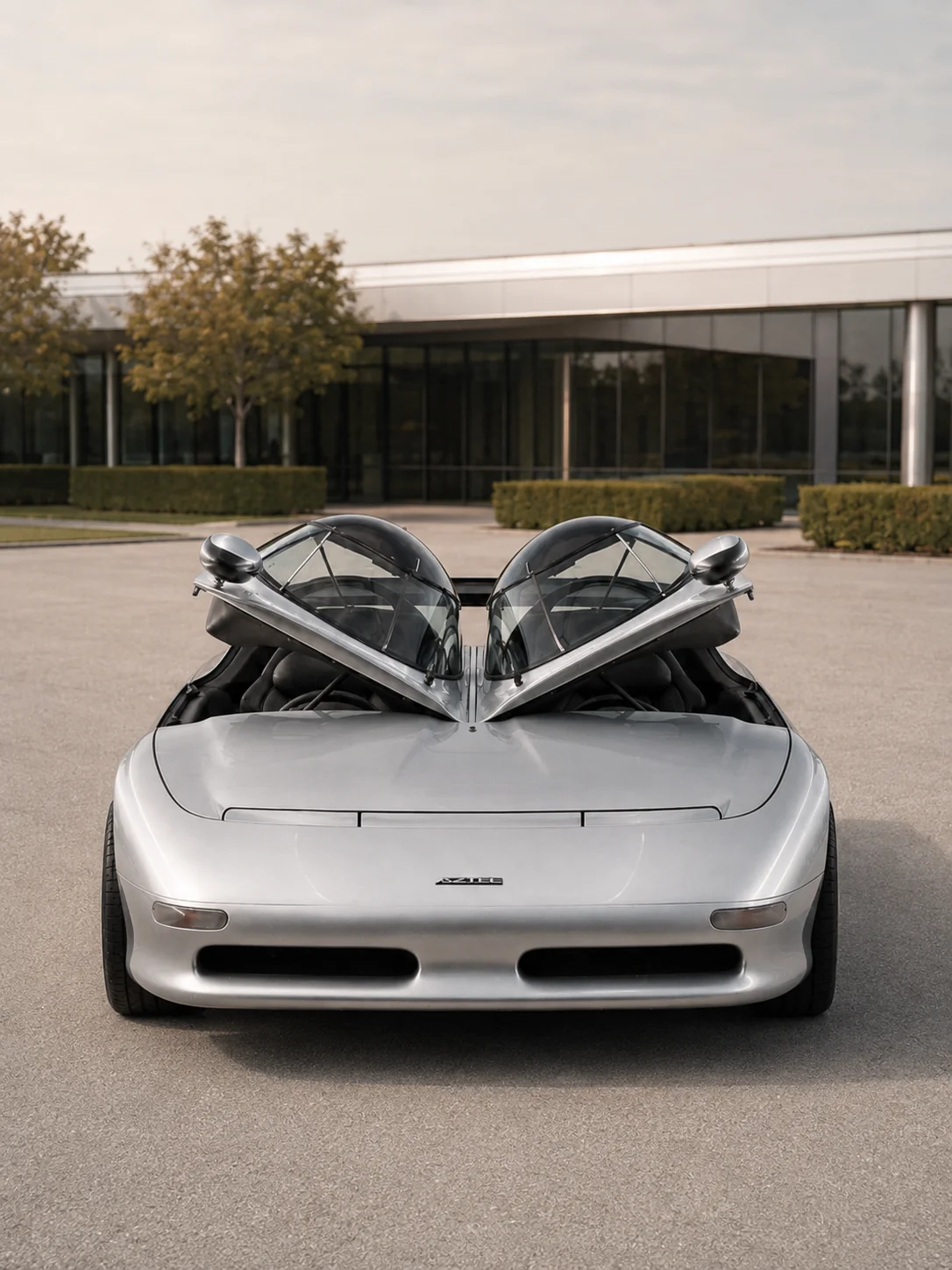
Then the centreline. Rather than one cabin, the Aztec is divided into two symmetrical halves, each with its own screen and its own canopy, separated by a raised spine running the length of the car. Seen head on with both canopies raised, the geometry reads as aerospace rather than automotive.
Along each flank sits a service panel opened by entering a code: fluid readings and a temperature gauge on one side, a torch, a compressor, a screwdriver and a fire extinguisher on the other. Whether any owner ever used them is beside the point. The idea was that a car should carry its own service bay.
A Wheel That Steers Nothing
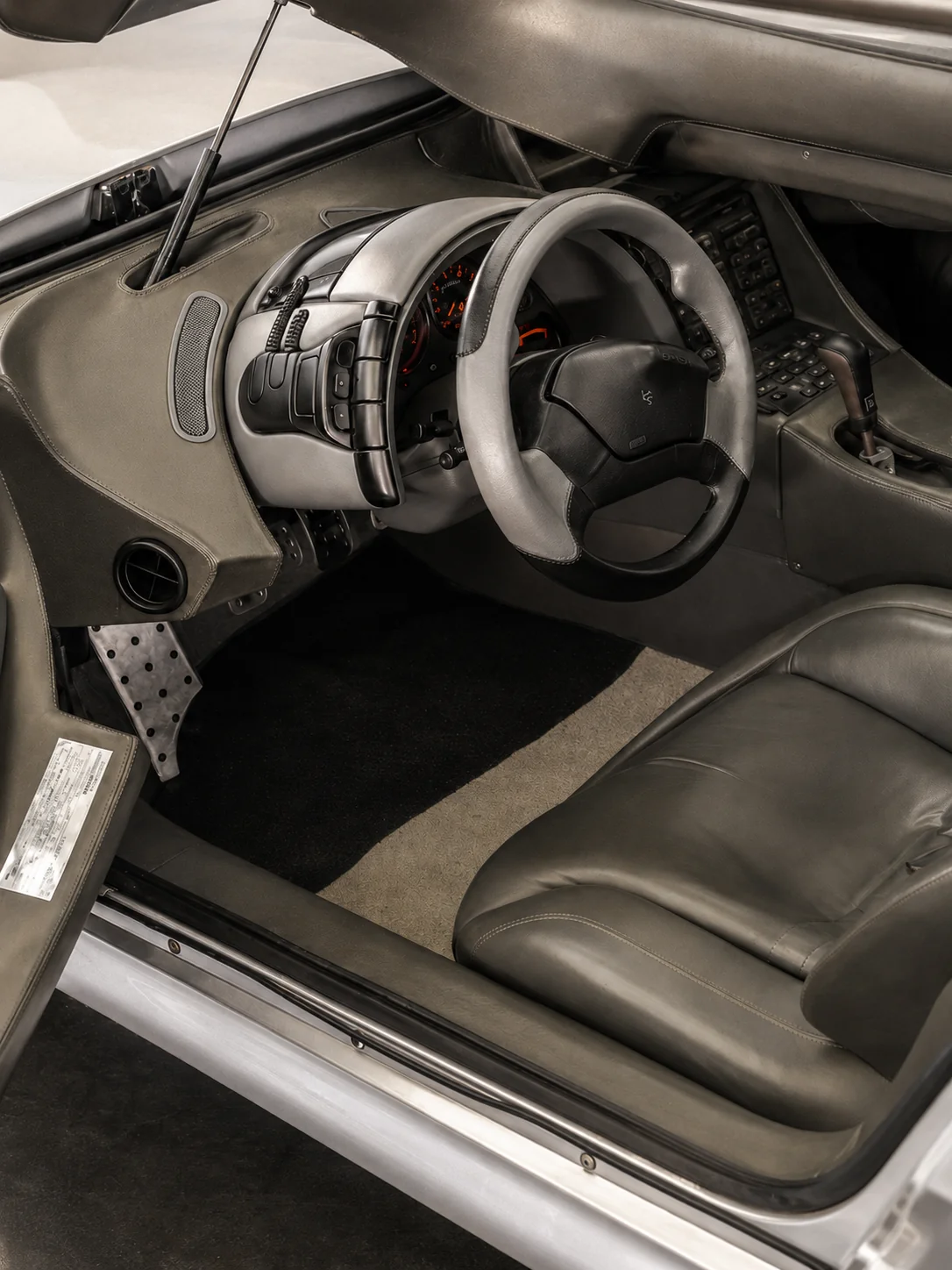
A Cabin Arranged as a Cockpit
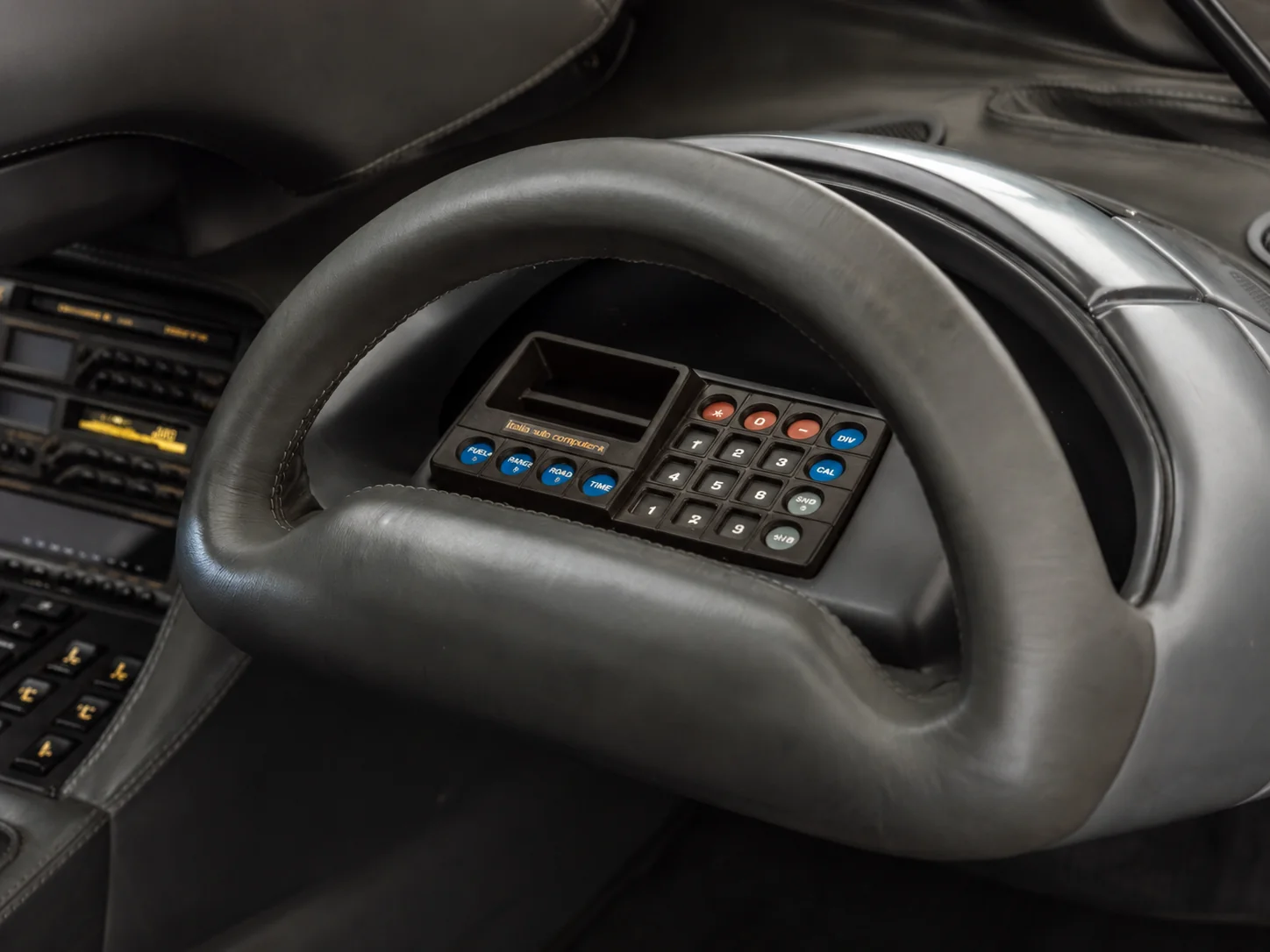
The driver sits behind a Nardi wheel and an instrument bank that gathered everything electronics could then offer a car. The passenger sits behind a wheel as well, and it steers nothing: a console shaped like a steering wheel, carrying readouts on the car's condition alongside damper settings, engine timing and the intercom controls.
Because each occupant sits under a separate canopy, ordinary conversation was not assumed. The intercom linking the two positions was advanced for 1988, and it turns a short drive into something closer to crew procedure.
At the centre of the dashboard, angled toward the driver, sits a satellite navigation display. The audio is a JVC installation with an in dash compact disc player and a cassette deck. An electronic rally timer is mounted within reach.
The materials are conventional where the architecture is not. Leather throughout, roll bars built into the structure, and a luggage compartment sized for two people travelling rather than for a show stand.
Everything so far was drawn in Turin. What comes next was not.
Ingolstadt and Turin
Borrowed From the Fastest Cars of the Decade
Neither part was made for this car. Both came from programmes built to win rallies.
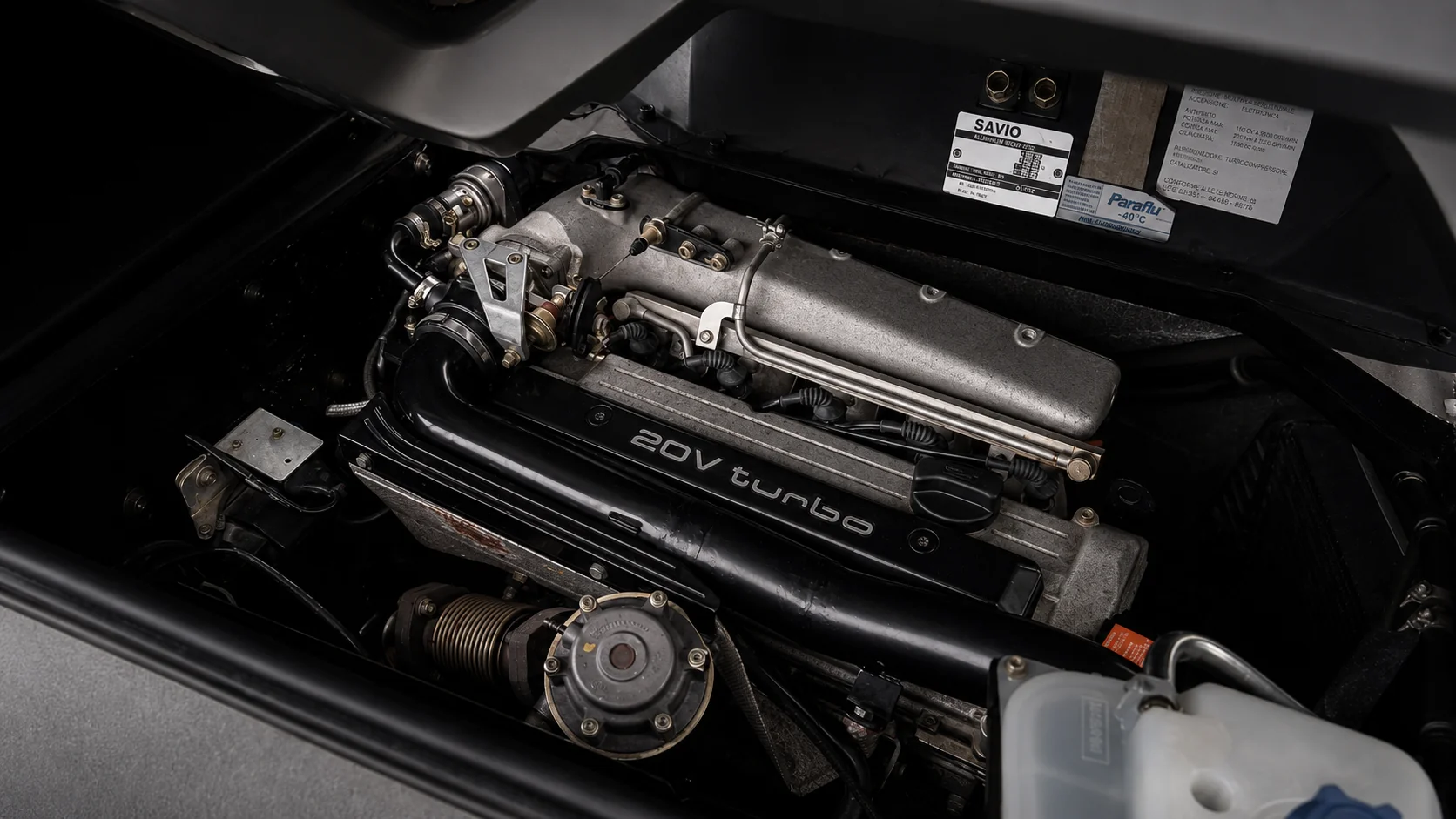
The engine sits behind the cabin: a turbocharged five cylinder of 2.2 litres, twenty valves, sourced from Audi. It is the configuration that carried the Quattro through Group B and gave the marque a sound nothing else on the road produced.
Drive reaches all four wheels through a five speed manual gearbox and the system taken from the Lancia Delta HF Integrale, the road going relative of the Delta S4.
ItalDesign had planned the Aztec around Audi's new 3.6 litre V8. That engine was not finished in time, and the five cylinder took its place.
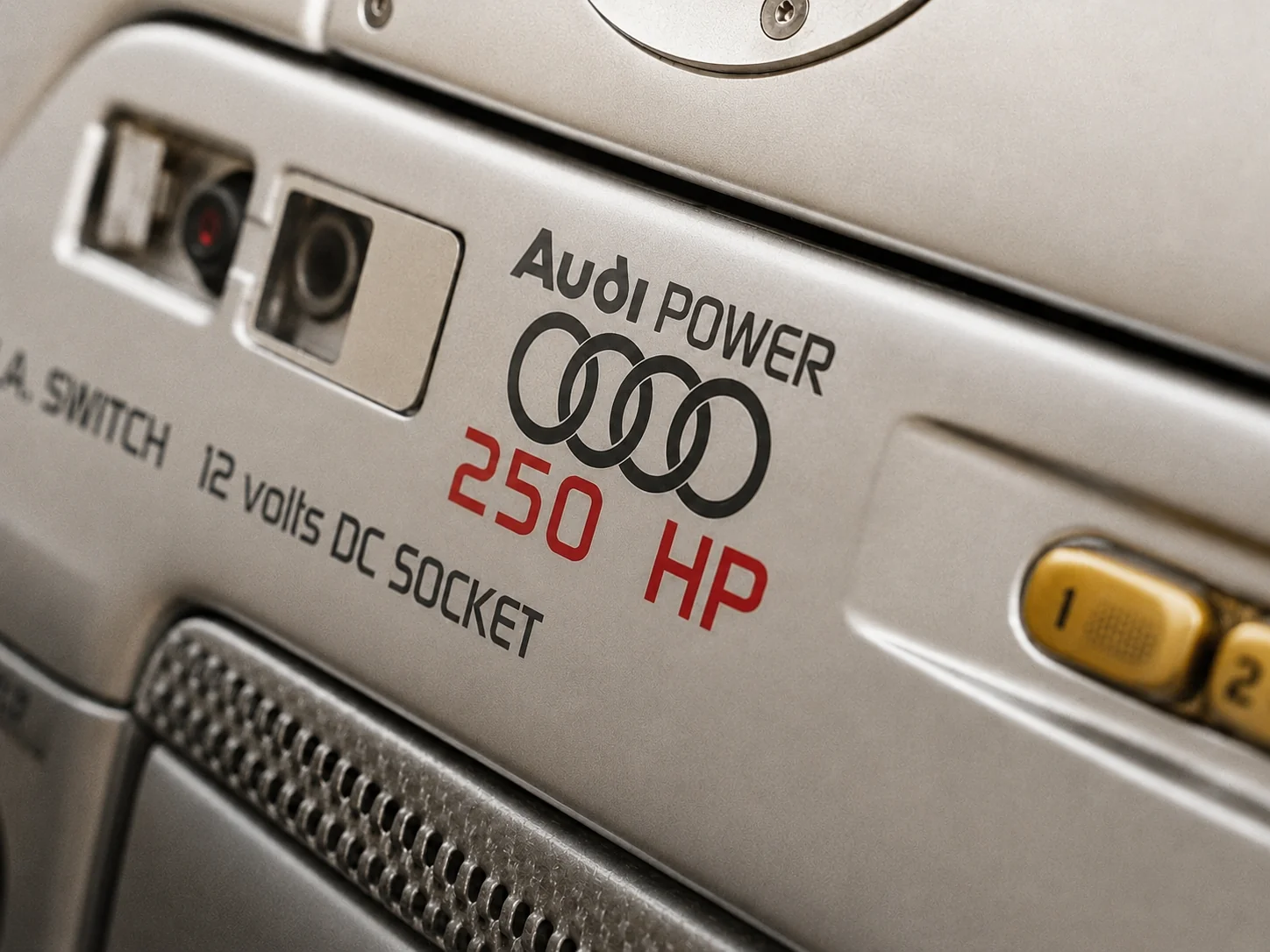
- 250 HP
- Badge on the flank
- 200 PS
- Standard specification, contemporary references
- 247 HP
- Quoted in later sources
Many cars were fitted with boosted engines closer to the badged figure. All output claims are subject to buyer verification.
It was drawn to be looked at. Someone decided otherwise.
Turin to Type Approval
How a Concept Became a Car
A show car answers to nothing. The Aztec on the ItalDesign stand in 1988 was drawn under that freedom, and by every reasonable expectation that should have been the end of it, as it was for the Aspid and the Asgard standing beside it.
Instead the rights were acquired and a limited series was planned: fifty cars, built to the concept's specification and directed principally at the Japanese market. Carrozzeria Savio in Turin was contracted to construct them, and the Audi tuning house Motoren Technik Mayer was engaged to make the car legal, work that ended in German type approval for road use.
Accounts of who drove the project differ. The Japanese industrialist Mario Myakawa is named in most tellings as the buyer of the rights, while other records attribute the purchase to a Turin trading company. The cars were delivered either way, at DM 500,000 each, a figure that placed the Aztec among the most expensive cars available anywhere at the end of the 1980s.
Giugiaro's own reaction is recorded. When the car was exhibited at Turin, he said, he had found it difficult to imagine it would ever become real, and its arrival as something roadworthy rather than a static styling exercise gave him immense satisfaction.
- 50
- Cars planned
- 18
- Completed and delivered, approximately
- DM 500,000
- Price when new
309 Kilometres From New
The Record
of This Car
309 kilometres separate this Aztec from the day it left its builders. That distance is measured in demonstrations and short moves between storage and display, not in use, and it places the car among the least driven examples of a series that was barely driven to begin with.
Cars kept this still do not stay ready. This one has recently undergone comprehensive mechanical recommissioning, including an extensive service, carried out so that the next custodian inherits a car in running order rather than a project.
It is offered from Tomini Classics in Dubai, where it may be inspected by appointment. Chassis and build number, ownership history and the documentation accompanying the car are available to serious enquirers on request.
Technical Data
Identity
Model
ItalDesign Aztec
Year
1988
Design
Giorgetto Giugiaro, ItalDesign
Debut
Turin Motor Show, 1988
Coachwork
Carrozzeria Savio, Turin
Homologation
Motoren Technik Mayer, German type approval
Production
Approximately 18 completed against a planned run of 50Some sources allow up to 25
Body
Dual cockpit roadster
Stock reference
PRO-002
Engine and Transmission
Engine
Turbocharged inline five cylinder, Audi, 2.2 litresPer seller; 2.5 litres appears in some sources
Valvetrain
20 valve, DOHC
Position
Behind the cabin
Output
250 HP as badged on the bodyContemporary references list 200 PS standard; 247 HP quoted later; many cars boosted closer to the badge
Transmission
Five speed manual
Drive
Four wheel drive, system derived from the Lancia Delta HF Integrale
Top speed
Approximately 150 mphPeriod claim, never independently established
Body and Chassis
Chassis
Steel
Body panels
Aluminium, carbon fibre and Kevlar
Roof
Removable panels over each cockpit
Aerodynamics
Carbon fibre rear wing
Safety
Integrated roll bars
Access
Conventional doors with glazed inserts, upper cockpit sections hinged on the centreline
Service panels
Coded access on both flanks, fluid readings and onboard equipment
This Car, As Offered
Exterior
Silver metallic
Interior
Grey leather
Mileage
309 kilometres from new
Condition
Recently recommissioned, extensive service completed
Location
Tomini Classics, Dubai
Chassis number
On request
Build number
On request
Price
445,000 USD
Figures for a car of this rarity vary between published sources and are quoted here as found. All details are subject to buyer verification.
No Angle Repeats
Notes in the Margin
A Chimera on Purpose
Group B ended because it had become too fast to control. Less than two years later its two defining drivetrains were sold together, in a car with no competition intent, to buyers who would mostly never drive it. Nothing about that sequence was planned.
Two Films
Roger Corman cast the Aztec as the computer controlled car of the protagonist in Frankenstein Unbound in 1990, set in a Los Angeles of 2031. It appeared again in 1996 in the Italian comedy A spasso nel tempo, alongside two other Giugiaro concepts.
The Price It Asked
DM 500,000 in 1990 bought an Aztec. The same money bought several Ferrari F40s, or a house in most European capitals. Approximately eighteen buyers chose the Aztec.
Car Designer of the Century
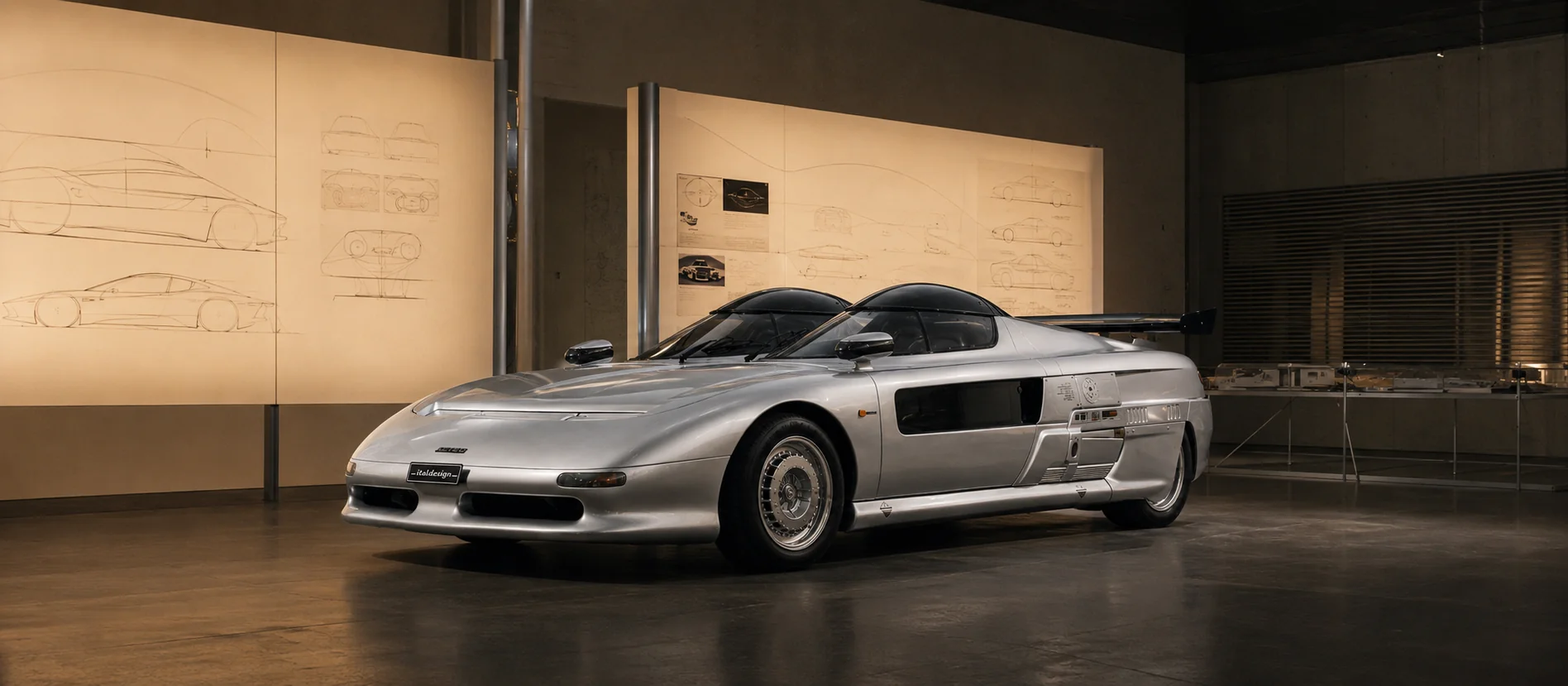
In 1999 a panel of designers and journalists from around the world voted Giugiaro the most significant automotive designer of the twentieth century. The Aztec was drawn eleven years earlier, at the point where his studio answered to nobody.
Where This Car Belongs
An Invitation List of Its Own
Concours categories for concept cars, prototypes and the late twentieth century now exist where they did not twenty years ago. The Aztec sits inside that territory more completely than almost anything else eligible for it.
Its case is unusual. This is not a surviving example of a production run but a design studio's own car, built by a coachbuilder, homologated by a specialist and completed in a series of roughly eighteen.
Entry decisions rest with each organiser. Few cars, though, arrive with a shorter list of comparable rivals.
Committees value originality and documented history above use. On both counts a car of 309 kilometres presents unusually well.
All eligibility is subject to confirmation with the individual organiser.
The QuailVilla d'EsteSalon PrivéHampton CourtAmelia Island
All eligibility is subject to confirmation with the individual organiser.
The Next Custodian
The Aztec is held in Dubai and may be inspected by appointment. Records, chassis details and terms are shared directly with serious enquirers.